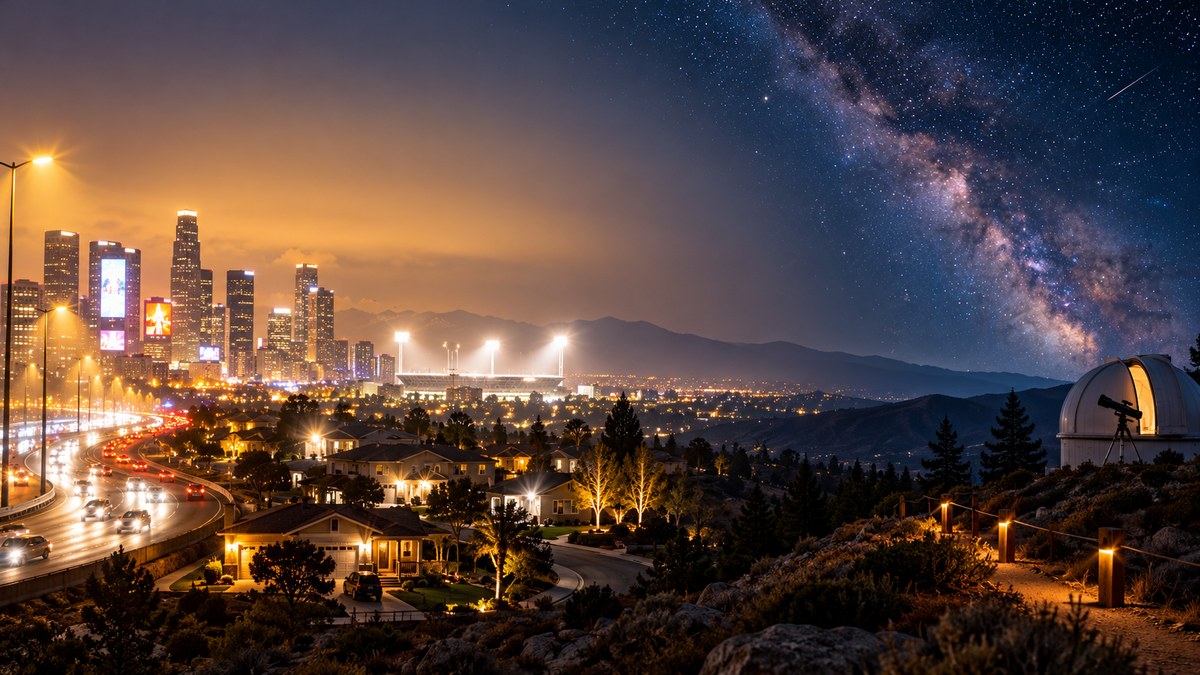
You look up at the night sky from your backyard, expecting to see a blanket of stars. Instead, you see a pale orange glow. A few of the brightest planets peek through, but the Milky Way is nowhere to be found. That glow is light pollution, and it is one of the fastest growing environmental problems of our time. More than 80 percent of people in North America cannot see the Milky Way from where they live. The effects of light pollution go far beyond a disappointing view. They disrupt entire ecosystems, harm human health, and waste massive amounts of energy. The good news is that you can fight back. This guide will walk you through the real cost of light pollution and show you simple, practical steps to reclaim your night sky.
Light pollution does not just hide the stars. It confuses migrating birds, disrupts insect populations, harms human sleep cycles, and wastes billions of dollars in energy each year. The solution starts at home: shield your outdoor lights, use warm color bulbs, and turn off what you do not need. Small changes by many people add up to a darker, healthier sky.
What Is Light Pollution Exactly?
Light pollution is the inappropriate or excessive use of artificial light. It comes in several forms. Skyglow is the bright halo you see over a city from miles away. Glare is the harsh brightness that makes it hard to see. Light trespass happens when your neighbor’s floodlight shines into your bedroom window. Clutter refers to the jumble of overly bright signs and streetlights. All of these rob you of a natural night environment.
The problem is growing. Satellite data shows that the Earth’s artificially lit outdoor area increased by at least 2 percent per year between 2012 and 2022. In 2026, that trend continues. More LEDs are being installed, and many of them are too bright and the wrong color. The shift to LED lighting was supposed to save energy, but in many cases it made things worse. Cities installed brighter lights than needed, and the blue-white light scatters more easily in the atmosphere, making skyglow worse.
How Light Pollution Steals Your View of the Cosmos
The most obvious effect of light pollution is that it washes out the night sky. When artificial light bounces off dust and moisture in the air, it creates a veil of brightness. This makes faint stars invisible. In a suburban sky, you might see a few hundred stars. In a truly dark sky, you can see thousands. The Milky Way, which is the combined light of billions of stars in our galaxy, becomes invisible to most people in the United States.
This is not just about beauty. It is about connection. Stargazing is a gateway to understanding the universe. When you cannot see the stars, you lose that connection. If you want to see what you are missing, check out our guide on understanding the night sky. Even in a light polluted area, you can still learn to identify the brightest objects. But to truly see the cosmos, you need to find darker skies.
The Hidden Toll on Wildlife
Light pollution effects reach deep into the natural world. Artificial light at night confuses animals that rely on natural darkness for navigation, reproduction, and feeding.
Birds and Insects
Every spring and fall, millions of birds migrate at night. They use the stars and moon to navigate. Bright city lights disorient them. Birds circle glowing buildings until they collapse from exhaustion. They crash into windows. The National Audubon Society estimates that up to one billion birds die each year from building collisions in the United States. Light pollution is a major factor.
Insects suffer too. Many insects are attracted to lights. They fly around streetlights until they die. This reduces food for bats and birds. It also harms pollination. A 2024 study found that artificial light at night reduces nocturnal pollination by 62 percent. That affects plants, crops, and entire ecosystems.
Sea Turtles and Marine Life
Sea turtle hatchlings use the reflection of the moon on the ocean to find the water. Bright beachfront lights lure them inland, where they die from dehydration, predators, or cars. Coastal communities that switch to turtle friendly lighting see dramatic improvements in hatchling survival rates.
Nocturnal Animals
Many animals are active at night. They hunt, mate, and avoid predators under the cover of darkness. Artificial light disrupts these behaviors. It makes prey more visible. It changes predator prey dynamics. It can even alter hormone levels in animals like frogs and mice. The natural rhythm of day and night is essential for their survival.
How Light Pollution Affects Your Health
You might think light pollution only matters if you care about astronomy. That is not true. It affects your health directly.
Sleep Disruption
Your body has an internal clock called the circadian rhythm. It relies on darkness to produce melatonin, the hormone that helps you sleep. Exposure to artificial light at night, especially blue light from screens and LED streetlights, suppresses melatonin production. This makes it harder to fall asleep and stay asleep.
Poor sleep is linked to a long list of health problems: obesity, diabetes, heart disease, depression, and even certain cancers. The American Medical Association has recognized light pollution as a public health concern. They recommend that communities use lighting with a color temperature of 3000 Kelvin or lower to reduce blue light exposure.
Mental Health
There is growing evidence that living under constant artificial light affects mood. People in areas with high light pollution report higher rates of anxiety and depression. The loss of a natural night sky also has a psychological cost. Humans have looked at the stars for thousands of years. Losing that view is a loss of cultural heritage and wonder.
The Energy and Economic Waste
Light pollution is a massive waste of resources. The International Dark Sky Association estimates that at least 30 percent of outdoor lighting in the United States is wasted. That means light that shines upward into the sky or onto areas where it is not needed. That wasted light costs about $3.3 billion per year. It also produces 21 million tons of carbon dioxide emissions annually.
Unshielded lights are the biggest culprit. A fixture that shines light in all directions wastes most of its output. A properly shielded fixture directs light downward, where it is needed. This uses less energy and creates less skyglow. Many cities are now switching to fully shielded LED fixtures with warm color temperatures. It saves money and improves safety.
A Practical Guide to Fighting Light Pollution
You do not need to wait for your city to act. You can make a difference starting tonight. Here is a numbered list of steps you can take.
- Audit your outdoor lights. Walk around your property at night. Note every light that is on. Ask yourself: Do I need this light? Is it pointing where it should? Can I turn it off or dim it?
- Replace fixtures with shielded ones. Look for lights that are fully cut off. The bulb should not be visible from any angle. The light should only shine downward.
- Switch to warm color bulbs. Use bulbs with a color temperature of 2700K to 3000K. Avoid anything labeled “cool white” or “daylight” (4000K to 6500K). Warm light scatters less and is better for your health.
- Use motion sensors and timers. There is no reason for lights to stay on all night. Install motion sensors so lights only turn on when someone is present. Use timers to turn off lights after a certain hour.
- Close your blinds at night. This is one of the easiest things you can do. It blocks light trespass from outside and keeps your indoor light from leaking out.
- Talk to your neighbors. Share what you have learned. Suggest that they replace their unshielded floodlights. A neighborhood effort has a much bigger impact.
- Contact your local government. Ask your city council to adopt a dark sky ordinance. Many cities have done this successfully. They save money and improve quality of life.
Common Mistakes People Make
Many well intentioned efforts to reduce light pollution backfire. Here is a table of common mistakes and the right approach.
| Mistake | Why It Happens | The Better Way |
|---|---|---|
| Installing very bright LEDs | People think brighter equals safer. | Use the lowest brightness that meets your needs. Overlighting creates glare and reduces visibility. |
| Using blue-white bulbs | They look modern and are widely sold. | Choose 2700K warm white bulbs. They are safer for wildlife and your sleep. |
| Leaving lights on all night | Habit or fear of crime. | Use motion sensors. Lights on all night waste energy and attract insects. |
| Pointing lights upward | To illuminate a sign or a tree. | Never point lights upward. Use downlighting or uplight trees with shielded fixtures. |
| Ignoring indoor light leakage | People forget that indoor light also contributes. | Close curtains and blinds. Turn off unused indoor lights. |
The Role of Technology in the Fight
Technology can help you reclaim the night sky. There are excellent tools for stargazing in light polluted areas. Our guide on how to use your smartphone for night sky astronomy shows you how to use apps to find planets and bright stars even in a city. For those ready to travel, our advice on choosing the perfect observatory site for clear night sky viewing will help you plan a trip to truly dark skies.
Light pollution filters for telescopes are also available. They block the specific wavelengths of light from sodium and mercury vapor lamps. These filters can dramatically improve views of nebulas and galaxies from suburban locations. If you are shopping for a telescope, consider one that works well in less than perfect conditions. Our guide on how to choose the perfect beginner telescope for your first night sky adventure can help you pick the right one.
What You Can See from Different Light Pollution Levels
It helps to know what to expect from your location. The Bortle scale measures sky brightness on a scale from 1 (excellent dark sky) to 9 (inner city). Here is what you can see at each level.
- Bortle 8 or 9 (City center): You can see the moon, planets, and a handful of the brightest stars. The Milky Way is invisible. A small telescope will show you Jupiter’s moons and Saturn’s rings.
- Bortle 6 or 7 (Suburban): You can see several hundred stars. The brighter constellations are recognizable. With a telescope, you can see many star clusters and bright nebulas.
- Bortle 4 or 5 (Rural): The Milky Way is faintly visible overhead. You can see thousands of stars. Dark adapted eyes will reveal many deep sky objects.
- Bortle 1 to 3 (Dark sky site): The sky is stunning. The Milky Way casts a shadow. You can see the Andromeda Galaxy with your naked eye. This is where you want to be for serious stargazing.
If you live in a Bortle 7 or higher area, do not give up. You can still have a rewarding hobby. Learn to spot the Milky Way in your backyard this season by waiting for the right time of year and using a light pollution filter.
The Bigger Picture: Community Action
Individual actions are important, but real change happens when communities work together. Many towns across the United States are adopting dark sky friendly lighting codes. They replace old streetlights with fully shielded, warm colored LEDs. They turn off unnecessary lights in parks and public buildings after midnight. The results are impressive. Energy bills drop. Residents report better sleep. Wildlife starts to return.
You can be part of this. Join a local astronomy club. They are often at the forefront of light pollution advocacy. Support the work of DarkSky International. Their resources on responsible outdoor lighting are excellent. Even a simple conversation with your neighbor about their unshielded floodlight can start a chain reaction.
“The night sky is a shared natural resource. It belongs to everyone. Protecting it is not just about astronomy. It is about health, ecology, and our connection to the universe.” – DarkSky International
Reclaiming Your Night Sky Starts Tonight
Light pollution effects are real and widespread. They steal your view of the stars. They harm birds, insects, and sea turtles. They disrupt your sleep and waste your money. But you are not powerless. The steps to fight back are simple and effective.
Start with one change tonight. Turn off a light you do not need. Replace one bulb with a warm colored one. Look up and notice how many stars you can see. Then make another change tomorrow. Over time, these small acts add up. You will see more stars. You will sleep better. You will feel more connected to the natural world.
The night sky is waiting for you. Go out, look up, and take back what is yours.