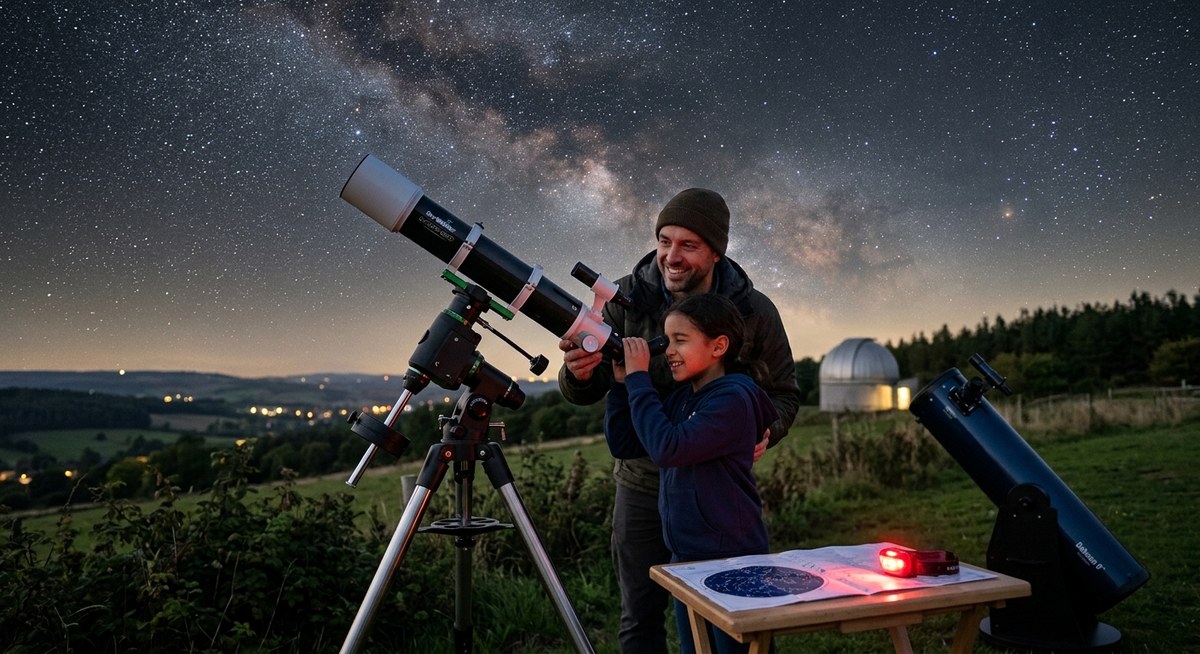
Getting started in astronomy can feel overwhelming. The night sky is vast, filled with wonders waiting to be discovered. Choosing the right telescope makes all the difference in enjoying your first stargazing experiences. Luckily, there are beginner-friendly options designed to be easy to use, affordable, and capable of showing you stunning sights like planets, the moon, and bright deep sky objects. This guide will help you find the best beginner telescope for exploring the night sky and turning your curiosity into a lasting passion.
Choosing the best beginner telescope for exploring the night sky involves balancing ease of use, budget, and the types of objects you want to see. Simple Dobsonians or compact refractors are excellent starting points for new stargazers aiming to enjoy clear views without complication or high cost. Focus on models that are portable, straightforward to operate, and come with helpful accessories to make your astronomy journey enjoyable from day one.
Why picking the right telescope matters for beginners
Starting with a suitable telescope sets the foundation for a rewarding experience. A beginner-friendly model helps you avoid frustration and unlock stunning views quickly. The goal is to find a telescope that is easy to set up, simple to operate, and capable of showing you a variety of objects. When you’re new, the right choice can turn your initial curiosity into a lifelong passion for astronomy.
What makes a telescope ideal for beginners
An ideal telescope for beginners should have certain features. Here are some key qualities to look for:
- Ease of use: Simple setup and straightforward operation help you start observing faster.
- Good optics: Clear, bright images show more detail and keep your interest high.
- Portability: A lightweight design allows you to carry your telescope to different viewing spots.
- Affordability: Budget-friendly models that still deliver quality views make starting out less stressful.
- Expandability: Options to upgrade or add accessories later can keep your interest alive as you learn more.
Choosing the best beginner telescope for exploring the night sky
Follow these steps to select a telescope that fits your needs:
- Decide your budget
- Choose an optical design
- Pick a suitable mount
- Consider portability and accessories
Step 1: Decide your budget
Begin with a realistic budget. Many quality beginner telescopes fall in the $100 to $300 range. You want a model that offers good optics and ease of use without overspending. Remember, a more expensive telescope isn’t always better for beginners if it’s complicated or difficult to handle.
Step 2: Choose an optical design
Optical design affects how easy the telescope is to use and what objects it can show. The most common beginner options include:
- Dobsonian reflector: Known for their simplicity and large apertures, Dobsonians are great for seeing moon craters, planets, and bright deep-sky objects. They are usually very affordable and easy to operate.
- Refractor: Compact and sturdy, refractors are excellent for planetary viewing and daytime use. They are generally low maintenance and are perfect if you want a portable setup.
- Compound (Schmidt-Cassegrain or Maksutov-Cassegrain): These are versatile but tend to be pricier and more complex. They are better for those who want to delve into astrophotography later.
Step 3: Pick a suitable mount
The mount is how your telescope stays steady and aims at objects. For beginners, alt-azimuth mounts are the easiest. They move up-down and left-right, mimicking how you naturally look at the sky. Dobsonian mounts are a type of alt-azimuth that are simple and stable.
Step 4: Consider portability and accessories
A lightweight telescope makes it easier to take to dark skies away from city lights. Accessories like additional eyepieces or a star chart can improve your observing sessions. Many beginner models include starter kits with useful accessories to get you started.
Top recommended telescopes for beginners
Here are some of the best options for those just starting out. These models are known for their ease of use, good optics, and value for money.
- Dobsonian telescopes: They offer large apertures at affordable prices. For example, the Sky-Watcher Heritage 130P provides bright views of the moon and planets with straightforward operation.
- Refractors: The Celestron AstroMaster 70AZ is lightweight, simple to set up, and perfect for planetary and moon viewing.
- Compact telescopes: The Orion StarMax 90mm combines portability with decent power for bright deep sky objects.
How to get started with your new telescope
Once you have your telescope, follow these tips to kickstart your astronomy journey:
- Set up your telescope in a dark, stable location away from city lights.
- Use a star chart or stargazing app to find your first targets.
- Start with the moon and brightest planets. They are easy to locate and offer stunning views.
- Learn to focus carefully for sharp images.
- Keep a log of your observations to track your progress.
“Beginner astronomers often find that simplicity wins. A straightforward telescope with good optics provides the best first impressions of the night sky,” advises seasoned astronomer Sarah Johnson.
Common mistakes to avoid when choosing a beginner telescope
| Mistake | Why it matters | How to avoid it |
|---|---|---|
| Buying a telescope that’s too complicated | Frustration can kill your interest | Choose models with simple mounts and straightforward operation |
| Overestimating portability | Heavy telescopes are hard to carry | Select lightweight, compact options for easy transport |
| Ignoring optics quality | Blurry images discourage viewing | Prioritize models with good aperture and clear lenses or mirrors |
| Focusing only on magnification | Large numbers don’t guarantee better views | Look for aperture size and optical quality first |
Tips from experts on selecting your first telescope
“Starting with a small, easy-to-use telescope is the best way to develop your skills. As you learn, you can upgrade to more sophisticated models,” suggests amateur astronomer Mark Evans.
Final thoughts on choosing your beginner telescope
Finding the best beginner telescope for exploring the night sky is about balancing simplicity, value, and your personal interests. Focus on models that are easy to set up and operate, offer good optics, and fit your budget. Remember, the best telescope is the one that you use regularly. With patience and curiosity, your nights under the stars will fill with wonder and discovery.
Keep your eyes on the stars
Now that you have a clear idea of what to look for, take your time. Set up your telescope, learn the sky, and enjoy the process. The universe is full of amazing sights waiting to be seen. Starting with an easy-to-use telescope will make your journey into astronomy both fun and rewarding. Happy stargazing!