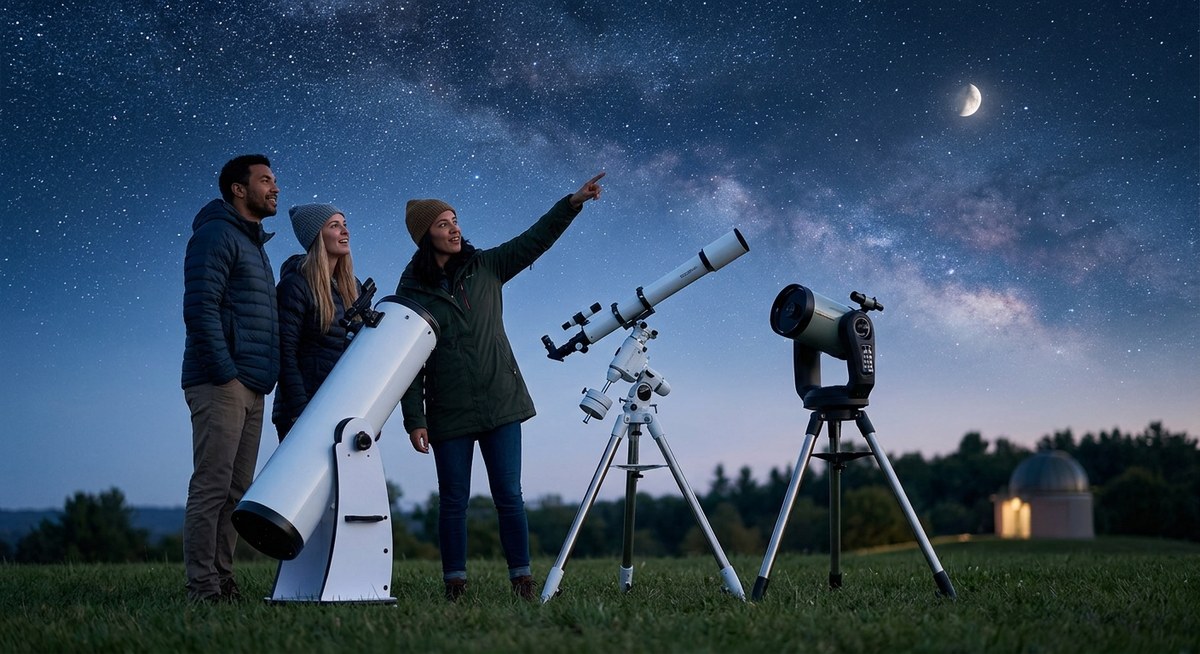
Stargazing offers a window into the universe’s mesmerizing beauty. Whether you are just starting out or have been gazing for years, selecting the right telescope can feel overwhelming. With countless models, features, and brands, how do you know which one suits your needs? This guide aims to simplify that decision-making process. We will walk you through everything from understanding different types of telescopes to practical tips for enhancing your night sky adventures.
Choosing the right telescope depends on your experience level, interests, and budget. Focus on understanding telescope types, key features, and how to use them effectively for stunning views of planets, the moon, and distant galaxies.
Understanding the basics of telescopes for stargazing enthusiasts
Before diving into specific models, it’s essential to grasp the core principles of what makes a telescope suitable for stargazing. The main goal is to see distant celestial objects clearly and comfortably. This involves considering factors like aperture size, focal length, mount type, and portability.
Aperture, the diameter of the telescope’s main lens or mirror, determines how much light it can gather. More light means brighter and more detailed images. Focal length influences the magnification and the field of view. Mounts provide stability, affecting how steady your view remains during observation. And portability ensures you can easily carry your telescope to different viewing sites.
Types of telescopes for stargazing enthusiasts
Choosing the right type of telescope is the first step. Each type has its strengths and limitations, making certain models more suitable for specific interests and experience levels.
Refractor telescopes
Refractors use lenses to bend light and produce images. They are known for crisp, high-contrast views and require less maintenance. These telescopes are ideal for beginners who want straightforward operation and sharp lunar and planetary images. They also work well in daylight for terrestrial viewing.
Reflector telescopes
Reflectors employ mirrors to collect light. They typically offer larger apertures at lower prices, making them excellent for viewing deep-sky objects like galaxies and nebulae. They may need occasional alignment, known as collimation, but their light-gathering power is unmatched for the price.
Catadioptric telescopes
Combining lenses and mirrors, catadioptric or compound telescopes offer a versatile experience. They balance portability, power, and ease of use. Popular models include the Schmidt-Cassegrain and Maksutov-Cassegrain types, perfect for enthusiasts who want a telescope capable of planetary, lunar, and deep-sky viewing.
Picking the right telescope based on your experience
Your level of experience influences the best type of telescope for you. Beginners often prefer simple, easy-to-use models like small refractors or tabletop Dobsonians. Advanced users may seek larger reflectors or sophisticated catadioptrics for detailed astrophotography.
Key features to consider when choosing a telescope
To make a smart choice, pay attention to these important features:
- Aperture: Larger apertures reveal more detail but may increase size and cost.
- Focal length: Longer focal lengths provide higher magnification but narrower fields of view.
- Eyepieces: Swappable eyepieces allow different magnifications; look for versatile options.
- Mount: Equatorial mounts enable tracking celestial objects, while alt-azimuth mounts are simpler and more portable.
- Portability: Consider weight and size if you plan to carry your telescope to dark sky sites.
- Ease of setup: Quick-assemble models save time and frustration, especially for beginners.
Practical steps to select the perfect telescope
Here’s a straightforward process to help guide your decision:
- Determine your budget: Decide how much you are willing to spend. Entry-level models can start around a few hundred dollars, while advanced telescopes can go well beyond.
- Identify your primary interests: Are you fascinated by planets, the moon, or deep-sky objects? Different telescopes excel at different targets.
- Assess portability needs: Will you frequently move your telescope? Compact models are better for travel.
- Research recommended models: Read reviews and consider trusted brands like Celestron, Sky-Watcher, or Orion.
- Visit local stores or clubs: Try out different models and gain firsthand experience.
- Start with a beginner-friendly option: If you’re new, a 4 to 6-inch Dobsonian or refractor can provide impressive views without overwhelming complexity.
- Upgrade gradually: As your skills grow, consider investing in larger or more advanced instruments.
Techniques for getting the most out of your telescope
Once you have your telescope, mastering basic techniques improves your viewing experience:
- Use a star chart or astronomy app to locate objects.
- Allow your telescope to cool down before observing.
- Use low magnification first to find objects, then switch to higher magnifications.
- Keep your telescope steady by using a stable mount and avoid touching the instrument during observation.
- Practice focusing, as sharp images depend on precise adjustments.
“Investing in a good mount and learning how to align it properly makes a significant difference in your stargazing experience,” advises seasoned astronomer Lisa Gonzalez. Proper alignment ensures accurate tracking and steadiness during long observations.
Common mistakes to avoid when choosing a telescope
| Mistake | Explanation |
|---|---|
| Focusing solely on magnification | High magnification can be tempting but often leads to blurry images if the aperture is small. |
| Ignoring the mount quality | A shaky mount ruins the experience regardless of telescope power. |
| Overlooking portability | Buying a heavy, bulky telescope may discourage regular use. |
| Chasing after expensive models | Budget-friendly options can still offer excellent views if chosen wisely. |
| Not researching before purchase | Skipping reviews or hands-on testing can lead to disappointment. |
Enhancing your stargazing experience
To truly enjoy your nights under the stars, consider these tips:
- Learn to use star charts or astronomy apps for navigation.
- Join local astronomy clubs for advice and shared viewing nights.
- Keep a stargazing journal to track your observations.
- Invest in quality eyepieces for better clarity and magnification.
- Practice patience — good views often come with practice and proper setup.
A final note on enjoying the night sky
Choosing the right telescope is a rewarding journey. It’s about matching your curiosity, budget, and interests with the right equipment. Remember, the best telescope is the one you use often and enjoy. Start with a model that fits your current needs and upgrade as your skills grow.
Getting comfortable with your telescope and understanding the night sky opens a universe of wonder. Keep your curiosity alive, and don’t hesitate to reach out to fellow stargazers for tips. With patience and practice, your nights under the stars will become cherished memories.
Your next step in stargazing
As you embark on your astronomical adventures, take the time to learn your equipment and the skies. With the right telescope and a little patience, celestial wonders will be within your reach. Happy stargazing!