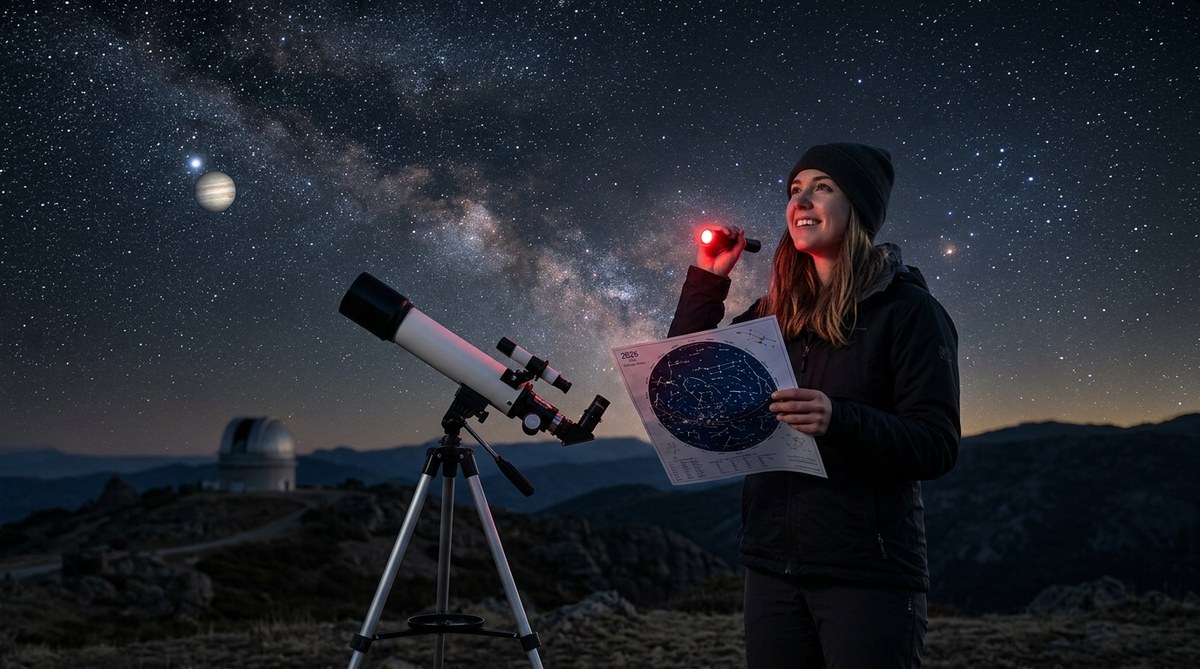
Getting started with stargazing in 2026 offers exciting opportunities to spot celestial objects that have captivated humanity for centuries. Whether you’re using binoculars, a beginner telescope, or simply your eyes, understanding how to recognize planets, stars, and other cosmic features is key to enjoying your night sky adventures. With new astronomical events happening throughout the year and advances in technology, this is the perfect time to sharpen your celestial identification skills. Here are some essential tips to help you become more confident in recognizing celestial objects in 2026.
In 2026, understanding key features of stars, planets, and deep sky objects will make your night sky observations more rewarding. Practical tips include learning to identify bright planets, using star charts, and recognizing seasonal patterns. Staying informed about celestial events and practicing regularly can help you become a more skilled amateur astronomer. This guide provides the foundational knowledge needed to confidently recognize objects even in light-polluted skies or with basic equipment.
How to Recognize Celestial Objects in 2026
Being able to identify celestial objects accurately involves a combination of observing techniques, understanding celestial patterns, and using technological aids. As the year unfolds, several distinctive events and objects will make your night sky exploration more engaging. Here are practical steps to help you recognize what you see.
1. Use star charts and astronomy apps
Star charts and planetarium apps are your best friends when starting out. They help you identify constellations, planets, and other objects based on your location and date. In 2026, several notable celestial events, such as planetary conjunctions and meteor showers, will be visible at specific times. Using tools like Stellarium or SkySafari can help you pinpoint objects that are visible in your area. Remember to set your location accurately and update the date and time to match your observing session.
2. Learn seasonal constellations and their patterns
Constellations change with the seasons. In early spring, look for Orion, Taurus, and Gemini. During summer, Cygnus, Lyra, and Aquila are prominent. Fall brings Pegasus and Andromeda, while winter showcases Orion again along with Taurus and Gemini. Recognizing the shapes and patterns of these constellations is vital for navigating the night sky. Once you familiarize yourself with their positions, you can use them as reference points to find planets and other objects nearby.
3. Identify planets by brightness and position
Planets are often the brightest objects in the night sky after the Moon. In 2026, the positions of Mercury, Venus, Mars, Jupiter, and Saturn will shift throughout the year. Venus shines brightly just after sunset or before dawn, while Jupiter and Saturn are visible for most of the year in the evening and early morning hours. Use a star chart or app to track their positions. Remember that planets do not twinkle like stars and maintain steady brightness, which helps distinguish them.
4. Recognize bright stars and their colors
Stars vary in brightness and color. For example, Betelgeuse appears reddish, while Rigel shines blue-white. Bright stars like Sirius, Vega, and Capella are easy to spot. Learning their names and positions will help orient yourself in the sky. Analyzing their colors can also provide clues to their temperature and type, enriching your understanding of the night sky.
5. Observe deep sky objects during favorable conditions
In 2026, various galaxies, nebulae, and star clusters will be within reach for amateur astronomers. The Andromeda Galaxy, Orion Nebula, and the Pleiades are popular targets. Use a telescope with a low to medium magnification to scan for these objects. Take note of their locations relative to familiar constellations. Clear, dark skies provide the best views, but even in light-polluted areas, some objects remain visible with patience.
Practical Techniques for Celestial Identification
| Technique | How it helps | Common mistakes |
|---|---|---|
| Using star charts | Provides visual reference for constellations and planets | Confusing nearby stars with planets due to brightness |
| Tracking planetary motion | Noticing the movement over nights confirms planetary objects | Assuming bright stars are planets when they are not |
| Recognizing seasonal patterns | Helps anticipate which constellations and objects are visible | Ignoring seasonal shifts and trying to find objects out of season |
| Comparing brightness | Bright objects are usually planets or bright stars | Misidentifying bright stars as planets or vice versa |
| Noting color differences | Colors indicate star types and help distinguish objects | Overlooking the significance of star colors |
“Familiarity with the night sky grows with consistent practice. Remember, every object has a unique signature, whether it’s the steady glow of a planet or the fuzzy appearance of a galaxy.” — Dr. Emily Carter, astronomer
Common pitfalls and how to avoid them
| Mistake | How to prevent it |
|---|---|
| Confusing stars with planets | Use the steady brightness of planets and their position relative to stars to tell them apart |
| Relying solely on light pollution | Use apps and star charts to compensate for urban skies |
| Ignoring seasonal cues | Learn which constellations are visible during each season to guide your search |
| Expecting perfect visibility every night | Be patient and adapt your observing schedule based on weather and moon phase |
Practical tips for improving celestial objects identification
- Start with bright objects: Focus on the Moon, planets, and bright stars first. They are easier to recognize and will build your confidence.
- Keep a log: Record what you see, including date, time, weather, and objects identified. Over time, this will reveal patterns and improve your skills.
- Join local astronomy clubs: Connecting with experienced stargazers can provide hands-on guidance and fresh insights.
- Attend astronomy events: Special skywatching nights or celestial events like conjunctions make excellent opportunities to learn and practice.
- Stay updated on celestial events: In 2026, events like planetary conjunctions and meteor showers will be visible at specific times. Check astronomy calendars regularly.
Final thoughts on mastering celestial objects in 2026
Achieving proficiency in celestial objects identification takes time and patience. As you familiarize yourself with the sky’s patterns and use the right tools, recognizing objects becomes a natural part of your stargazing routine. Remember to enjoy the process and celebrate the small victories of spotting your first planet or faint galaxy. The night sky holds endless wonders, and with consistent effort, you’ll deepen your appreciation for the universe around us.
Keep looking up and let your curiosity guide you
Practicing these tips regularly will help you become more confident in your celestial observations. Whether you’re watching a planetary conjunction or spotting a distant star cluster, each experience enriches your understanding of the cosmos. Grab your telescope, download an app, or simply lie back on a clear night. The universe is waiting to be discovered, one object at a time.