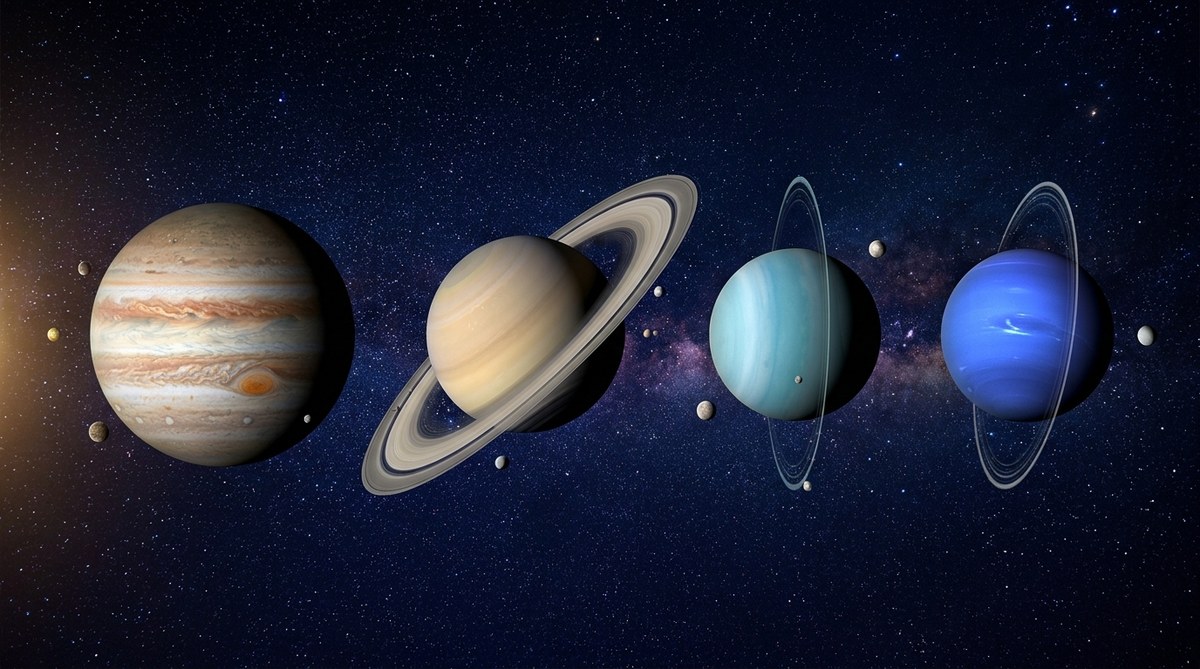
Jumping into the realm of the outer planets reveals a universe of fascinating worlds that ignite the curiosity of astronomy lovers, students, and casual skywatchers. These giants of our solar system each possess unique features, atmospheres, and histories that make them endlessly intriguing. Whether you’re planning your first telescope session or simply want to deepen your understanding of these distant worlds, this outer planets guide is your friendly companion to unlocking their secrets.
This guide offers a comprehensive look at Jupiter, Saturn, Uranus, and Neptune, highlighting their unique features, discovery history, and how to observe them. Perfect for enthusiasts eager to expand their cosmic knowledge.
Understanding the outer planets and why they matter
The outer planets are the giants of our solar system, situated beyond the asteroid belt. They include Jupiter, Saturn, Uranus, and Neptune. These planets are vastly different from the rocky inner planets. They are mostly made of gases and ices, which gives them their massive sizes and distinctive atmospheres. They hold clues about the formation of our solar system and the processes that shaped it.
Studying these worlds helps us understand planetary systems around other stars. They also challenge our technological limits with their remote locations and extreme conditions. For amateur astronomers, observing these planets offers a rewarding challenge and a chance to witness some of the most spectacular sights in the night sky.
Meet the giants: Jupiter and Saturn
Jupiter — The giant of the solar system
Jupiter, the biggest planet, is a massive ball of gas with a thick atmosphere mostly composed of hydrogen and helium. Its iconic Great Red Spot is a giant storm that has been raging for centuries. Jupiter has dozens of moons, including Ganymede, the largest moon in the solar system.
To observe Jupiter, a medium-sized telescope is enough to see its cloud bands and even some of its moons. The planet’s rapid rotation causes its distinctive striped appearance. Its strong magnetic field and intense radiation belts make it a fascinating object for both amateur and professional astronomers.
Saturn — The ringed wonder
Saturn is best known for its stunning ring system, which is a marvel of natural beauty. The rings are made of countless ice chunks and rock debris. Saturn’s atmosphere is mostly hydrogen and helium, with clouds of ammonia ice giving it a pale yellow hue.
Saturn’s largest moon, Titan, has a thick atmosphere and liquid lakes of methane and ethane, making it a prime target for future exploration. Observing Saturn with a telescope reveals its rings and some of its larger moons. Its beauty makes it a must-see for anyone interested in planetary observation.
The icy giants: Uranus and Neptune
Uranus — The tilted planet
Uranus is unique because of its extreme axial tilt. It rotates on its side, with its poles pointing almost directly at the Sun. Its atmosphere is mostly hydrogen and helium, with traces of methane that give it a bluish-green color.
Uranus’ moons and faint ring system are less prominent but still interesting. Because of its distance from Earth, Uranus appears as a small, faint disk even in large telescopes. Observing it requires patience and good observing conditions, but seeing this distant world is an achievement for amateur astronomers.
Neptune — The windy planet
Neptune is the most distant of the four giant planets and is known for its dynamic atmosphere and strong winds. Its vivid blue color results from methane absorption in its atmosphere. Neptune has a thin ring system and several moons, with Triton being the most notable.
Neptune’s small size and distance mean it appears as a tiny disk in telescopes, often requiring advanced equipment to observe detail. Tracking Neptune’s position over time helps in understanding its orbit and atmospheric activity.
How to observe the outer planets effectively
Observing these distant worlds involves some planning and the right equipment. Here’s a simple process to get you started:
- Choose the right time: Outer planets are best observed when they are at opposition, meaning they are directly opposite the Sun in the sky. This makes them brighter and more visible.
- Use appropriate equipment: A telescope with at least 4 inches (100mm) of aperture is recommended. A good mount with tracking capabilities helps keep the planet centered.
- Identify and locate: Use star charts or astronomy apps to pinpoint the planets’ positions during their best viewing periods.
- Adjust your telescope: Focus carefully and experiment with different magnifications to see cloud bands, rings, and moons.
- Record your observations: Take notes or images of what you see. Comparing your observations over time can reveal atmospheric changes and other phenomena.
Techniques for observing
| Technique | What it helps reveal | Common mistakes |
|---|---|---|
| Use of filters | Enhances details like cloud bands or rings | Relying solely on visual observation without filters can obscure detail |
| Long-exposure imaging | Captures faint moons and atmospheric features | Moving the telescope during exposure causes blur |
| Planetary sketching | Records details like storms and cloud patterns | Rushing focus or poor calibration reduces accuracy |
“Patience and practice are your best tools when observing the outer planets. Remember, each viewing session teaches you something new about these distant worlds,” advises seasoned astronomer Laura Benson.
Why studying the outer planets unlocks deeper cosmic understanding
Studying the outer planets reveals insights into planetary formation and evolution. These worlds act as natural laboratories for understanding gas and ice giant atmospheres, magnetic fields, and planetary rings. They also serve as stepping stones for understanding exoplanets orbiting other stars.
Learning about their moons, especially those with subsurface oceans like Europa or Triton, fuels the search for extraterrestrial life. This knowledge impacts not just astronomy but our understanding of life’s potential beyond Earth.
Practical steps to deepen your outer planets knowledge
- Join astronomy clubs or online communities. Sharing observations and tips can improve your skills.
- Attend planetarium shows or watch online webinars. These resources often include the latest discoveries and techniques.
- Read reputable guides or books about planetary science. They provide context and scientific background.
- Use astronomy apps for real-time planet tracking and observation planning. This makes it easier to catch planets at their best.
- Stay updated on space missions like Juno or the upcoming Europa Clipper. These missions continually expand our understanding of the outer worlds.
Final thoughts on the outer planets journey
Venturing into the universe of the outer planets offers endless discovery. With the right gear, patience, and curiosity, you can witness these distant worlds in a way that sparks awe and wonder. Remember, every observation adds to your understanding and appreciation of our vast solar system. Keep looking up, keep asking questions, and enjoy your celestial journey.
A personal invitation to keep looking beyond
Whether you’re gazing at Jupiter’s swirling storms or marveling at Saturn’s rings, each moment spent observing these planets deepens your connection with the cosmos. Use this guide as your starting point, and let your fascination grow. The universe is waiting to reveal its secrets, one planet at a time. Happy skywatching!