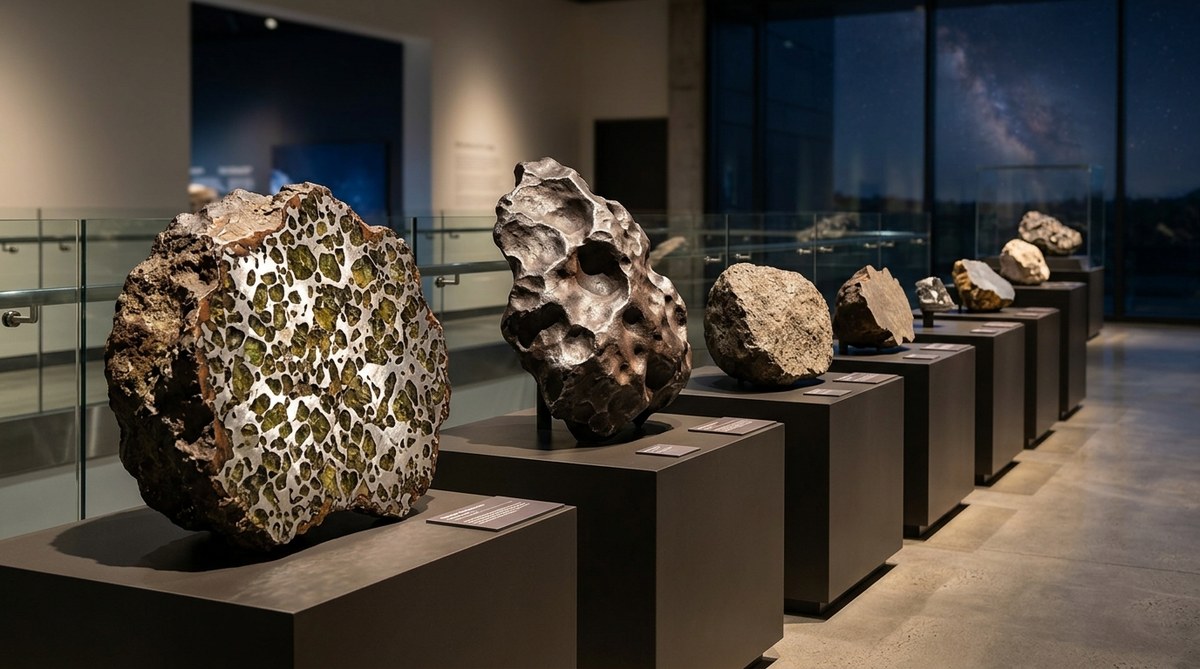
Meteorites have long fascinated humanity, offering glimpses into the building blocks of our solar system. Some meteorites are celebrated not only for their size but also for their rarity, history, and scientific significance. They serve as cosmic messengers, telling stories about the early solar system, planetary formation, and even the origins of life. In this guide, we will highlight the most spectacular meteorites on Earth, shining a light on their unique features and why they remain some of the most intriguing space rocks ever discovered.
This article showcases the most spectacular meteorites found on Earth, highlighting their size, rarity, and scientific importance. From massive iron masses to rare stony-iron specimens, learn what makes these space rocks extraordinary and why they continue to captivate enthusiasts and scientists alike.
Giants of the sky and Earth collide: the largest meteorites ever found
Some meteorites are so massive that they leave a profound mark on our planet. These colossal space rocks provide vital clues about the early solar system and planetary geology. Let’s look at some of the most remarkable among them.
The Hoba meteorite: Earth’s heaviest intact meteorite
The Hoba meteorite, located in Namibia, is the largest known intact meteorite on Earth. Weighing approximately 60,000 kilograms, it remains in the place where it was found. Its massive iron composition and near-pristine state make it a favorite for visitors and scientists alike. Its size and preservation offer insights into how large meteorites survive atmospheric entry and impact.
The Cape York meteorite: a giant piece of iron that shaped indigenous history
This meteorite, found in Greenland, weighs over 30,000 kilograms. Known for its striking metallic appearance, the Cape York meteorite is a source of iron for indigenous peoples for thousands of years. Its size and composition reveal how certain meteorites can become natural resources and cultural artifacts.
The Gancedo meteorite: a rare iron meteorite
Discovered in Argentina, the Gancedo meteorite weighs around 30,800 kilograms. It is a part of the Campo del Cielo (Field of the Sky) meteorite group, known for their large sizes and magnetic properties. Such meteorites help scientists understand the differentiation processes inside asteroids.
Remarkable meteorites with extraordinary histories
Some meteorites are celebrated not only for their size but for their fascinating backstories and scientific value.
The Allende meteorite: a time capsule from the early solar system
Found in Mexico, the Allende meteorite weighs about 2,200 kilograms. It is a carbonaceous chondrite, rich in calcium-aluminum-rich inclusions that date back to the formation of the solar system over 4.5 billion years ago. Its study has contributed to understanding how planets and other celestial bodies formed.
The Murchison meteorite: building blocks of life
This meteorite, discovered in Australia, is famous for containing amino acids and organic compounds. Weighing approximately 100 kilograms, it provides evidence that some of the building blocks of life may have come from space, making it a key piece in planetary science.
The Fukang meteorite: a stunning pallasite
Unearthed in China, the Fukang meteorite is celebrated for its beautiful olivine crystals embedded within a stony-iron matrix. Its aesthetic appeal and rarity make it one of the most spectacular pallasites ever found.
How scientists identify and analyze spectacular meteorites
Understanding what makes a meteorite spectacular involves examining several factors:
- Size and mass
- Composition (iron, stony, or stony-iron)
- Rarity and scientific significance
- Historical or cultural importance
Practical steps in meteorite identification
- Observation: Spot a bright fireball or meteor streak.
- Recovery: Search the fall area for metallic or unusual rocks.
- Initial inspection: Look for fusion crust, magnetic properties, and density.
- Laboratory analysis: Confirm composition and origin through spectroscopy and other techniques.
Common mistakes to avoid
| Technique | Mistake | Explanation |
|---|---|---|
| Relying only on appearance | Mistaking terrestrial rocks for meteorites | Some terrestrial rocks look similar but lack key features like magnetic properties or specific mineral compositions. |
| Ignoring location | Not considering where the meteorite was found | Proven meteorites are usually found in deserts, ice fields, or known fall zones. |
| Skipping analysis | Not conducting proper scientific tests | Visual inspection alone cannot confirm a meteorite’s authenticity. |
Expert tip: Always have a suspected meteorite examined by a qualified geologist or a reputable laboratory. This ensures accurate identification and valuable scientific data collection.
Why these meteorites matter for science and history
Spectacular meteorites enrich our understanding of space and planetary formation. They serve as natural archives, preserving information about the early solar system, planetary differentiation, and even the origins of organic compounds. Their size and rarity also make them important for educational and cultural reasons, inspiring curiosity about our universe.
How to view and acquire spectacular meteorites
If you are a collector or an enthusiast, it’s essential to purchase authentic meteorites from reputable sources. Many specialized dealers offer specimens like the Fukang pallasite or the Gancedo meteorite for educational purposes or personal collections. Always verify the provenance and scientific documentation before making a purchase.
Final thoughts on the most spectacular meteorites
Studying and appreciating meteorites that have made a significant impact on Earth enhances our knowledge of the cosmos. Whether giant iron masses or rare stony-iron specimens, each meteorite tells a story of cosmic collision, planetary evolution, and the interconnectedness of our universe. Sharing these stories fuels curiosity and scientific discovery.
A reminder to stay curious about the universe
Meteorites are a reminder that space is full of surprises. Their diverse sizes, compositions, and histories make them some of the most fascinating objects to study and collect. Keep looking up and stay curious about the stories written in the stars.