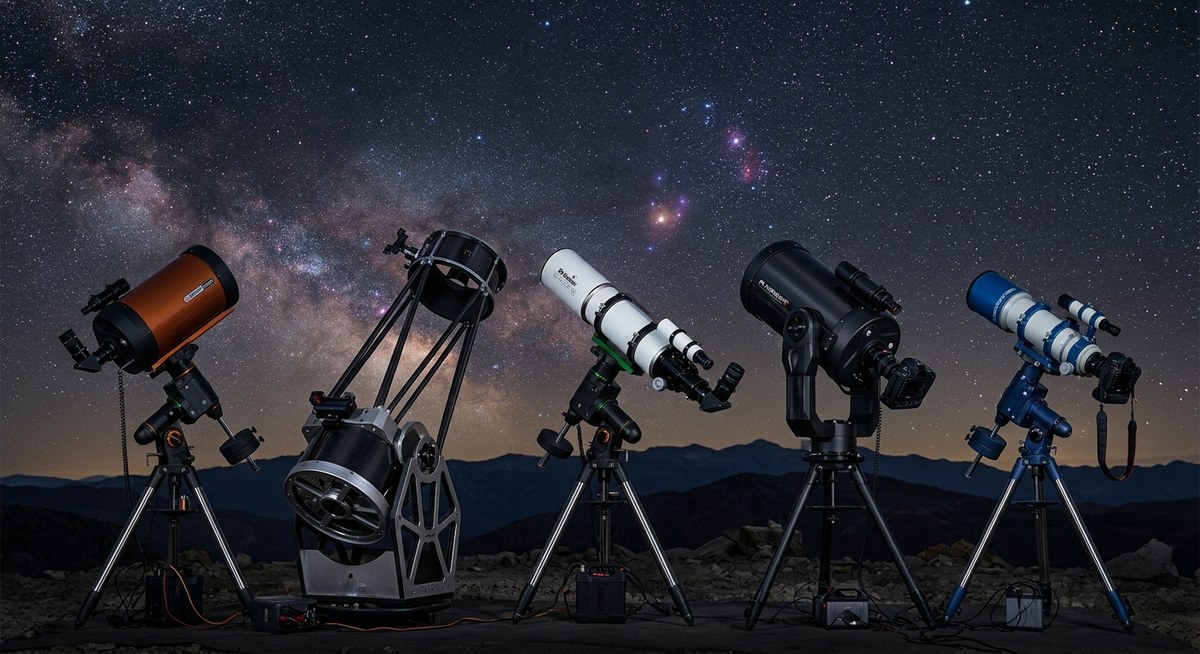
Deep sky observing remains one of the most thrilling aspects of astronomy. Whether you’re chasing faint nebulae, distant galaxies, or star clusters, having the right telescope makes all the difference. With technology advancing rapidly, 2026 offers some exciting options for amateur astronomers ready to elevate their deep sky viewing experience. Choosing the best telescope for deep sky observations in 2026 involves understanding your goals, your budget, and the technical specs that can bring the universe closer to your eyes. This guide will walk you through top picks, practical tips, and expert advice to help you find your perfect match.
The best telescopes for deep sky observations in 2026 combine large apertures with user-friendly features, enabling amateurs to see distant galaxies and nebulae in breathtaking detail. Focus on mounts, focal length, and accessories to maximize your stargazing potential and astrophotography results.
What to Look for in a Deep Sky Telescope in 2026
Before selecting a specific model, it’s helpful to understand what makes a telescope ideal for deep sky viewing. Key features include a large aperture to gather more light, a stable mount for precise tracking, and a suitable focal length to resolve faint objects. The latest innovations also emphasize automation, better optics, and compatibility with astrophotography gear.
Key features to consider:
- Aperture size: The bigger, the better for faint object detection.
- Focal length: Longer focal lengths enhance image scale for distant objects.
- Mount type: Equatorial mounts provide better tracking for astrophotography.
- Ease of use: Advanced features like GoTo systems help locate objects effortlessly.
- Portability: Balance size with your observing location and transport needs.
The Top 5 Advanced Telescopes for Deep Sky Viewing in 2026
Here are five top choices that combine power, precision, and modern features to unlock the universe in ways previous generations only dreamed of. These models are suitable for seasoned amateurs ready to push their limits.
1. Sky-Watcher EQ8-R Pro with Large Aperture
This mount paired with a high-quality reflector offers incredible light-gathering power. Its 200mm aperture captures faint nebulae and distant galaxies while the EQ8-R Pro’s computerized tracking ensures steady views and astrophotography capability. It’s a favorite among serious deep sky enthusiasts who want a reliable, upgradeable system.
Reasons to consider:
– Large 200mm aperture
– Precision tracking with GoTo capabilities
– Compatible with a range of optics
Reasons to avoid:
– Heavy and requires a sturdy setup
– Higher price point
2. Celestron EdgeHD 925 with Advanced Mount
For those who prefer a compact yet powerful optical system, the Celestron EdgeHD 925 combines superb image correction with a 2350mm focal length. Paired with a high-end mount, it’s perfect for high-resolution astrophotography and detailed deep sky observation.
Reasons to consider:
– Great for astrophotography
– Sharp, flat images with EdgeHD optics
– Advanced computerized mount included
Reasons to avoid:
– Size may be less portable
– Learning curve for new users
3. Meade LX850 with 12-inch Aperture
A true giant for deep sky observation, the Meade LX850’s 12-inch aperture allows you to glimpse the faintest cosmic structures. Its integrated computerized mount simplifies object location, making it suitable for both visual and imaging pursuits.
Reasons to consider:
– Massive 12-inch aperture
– Robust mount with precision tracking
– Excellent for astrophotography
Reasons to avoid:
– Heavy and bulky
– Higher cost
4. Orion Sirius EQ-G with a 150mm Refractor
While smaller than some options, this refractor combo offers excellent clarity and contrast for deep sky objects. Its portable design makes it a good choice for those who want high-quality views without the bulk of larger telescopes.
Reasons to consider:
– Good balance of size and performance
– Easy to set up and transport
– Sharp images suitable for astrophotography
Reasons to avoid:
– Limited aperture for extremely faint objects
– Not ideal for very distant galaxies
5. Takahashi TOA-150 Refractor with Mount
For astrophotographers seeking precision and high resolution, the Takahashi TOA-150 delivers. Its apochromatic design reduces chromatic aberration, revealing deep sky objects with stunning detail.
Reasons to consider:
– High-quality optics
– Excellent color correction
– Suitable for astrophotography and visual use
Reasons to avoid:
– Premium price
– Requires compatible mount and accessories
Practical Tips for Deep Sky Observation Success
Achieving stunning views of distant objects involves more than just choosing the right telescope. Here are some steps to help you get the most out of your equipment:
- Research your target objects: Know where to look and what to expect.
- Set up in a dark sky location: Light pollution hampers deep sky viewing.
- Use appropriate filters: Narrowband filters can improve contrast for nebulae.
- Calibrate your mount: Proper polar alignment ensures smooth tracking.
- Patience is key: Allow your eyes and equipment time to adapt.
How to choose the right setup:
| Technique | Mistake | Tip |
|---|---|---|
| Overestimating mount capacity | Using a mount that can’t handle your telescope’s weight | Match mount specifications to your scope size |
| Ignoring focal length | Picking a telescope with too short or long focal length | Consider your target objects and desired magnification |
| Neglecting accessories | Skipping filters or eyepieces | Invest in filters, Barlow lenses, and quality eyepieces |
“A stable mount and a large aperture are the backbone of deep sky observing,” says astrophotographer Lisa Carter. “Pairing that with the right filters and patience transforms your nights under the stars.”
Making Your Choice for 2026
Selecting the best telescope for deep sky observations in 2026 depends on your experience, goals, and budget. If you’re ready to push your limits, a large reflector with advanced tracking can unlock distant galaxies and nebulae. For astrophotography, opt for models with flat-field optics and compatible mounts. Remember, the right accessories and a dark observing site will amplify your experience.
Practical steps:
- Identify your target objects and desired detail.
- Set your budget and prioritize features.
- Read user reviews and expert opinions.
- Consider future expandability and upgrade options.
A Final Word for Passionate Stargazers
Deep sky observation is a journey that rewards patience and good gear. Whether you opt for a high-end equatorial mount with a large reflector or a compact refractor for portability, the key lies in matching your equipment to your ambitions. As technology continues to advance, the universe becomes more accessible than ever, revealing its secrets to those willing to look up.
Take the time to research, invest thoughtfully, and enjoy the wonder of gazing into the depths of space. The cosmos is waiting for you to uncover its mysteries.
Unlocking the Universe in Your Backyard
Choosing the right telescope can seem overwhelming, but with a clear idea of what features matter most, you can find equipment that transforms your nights. Remember, the best deep sky telescope is the one that inspires you to keep looking up. Happy stargazing!