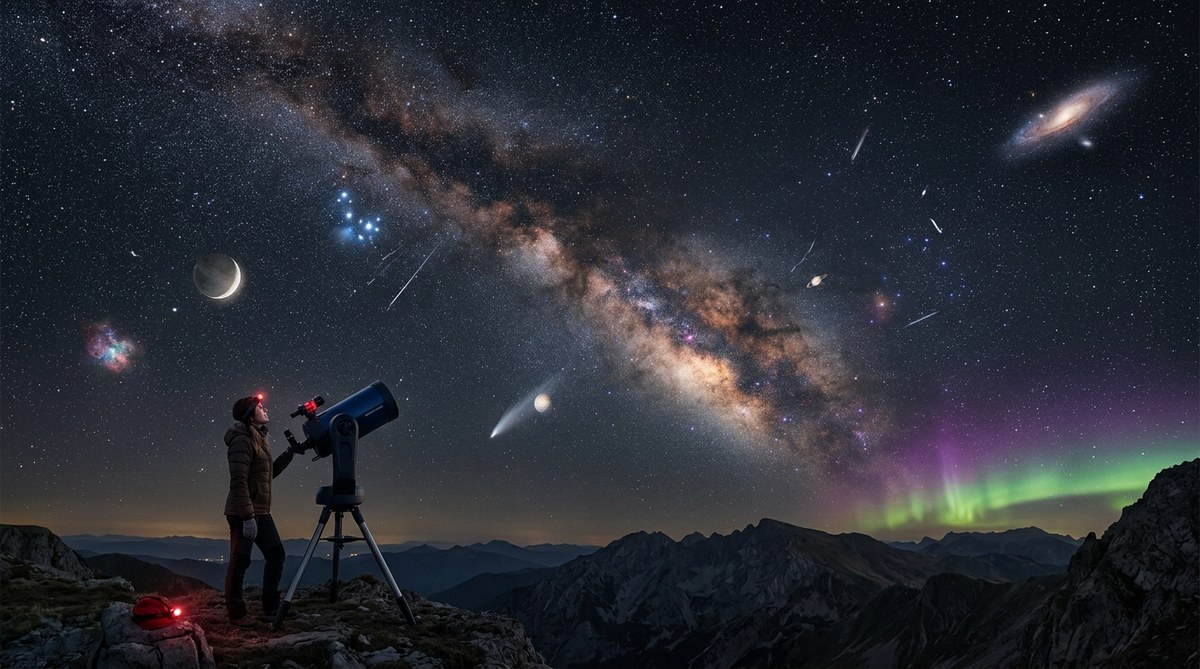
Stargazing offers a never-ending array of breathtaking sights. From luminous planets to spectacular meteor showers, the night sky is full of wonders waiting to be observed. Whether you are just starting out or have been gazing for years, knowing the top celestial phenomena for amateur astronomers can make your nights more exciting and rewarding. Some events happen regularly, while others are rare gems that only appear once in a lifetime. Being aware of these phenomena helps you plan your viewing sessions and expand your understanding of our universe.
This guide highlights the most captivating celestial events for amateur astronomers, including how to spot them, when they occur, and tips to make the most of your stargazing nights. Knowing these phenomena enriches your experience and deepens your connection with the cosmos.
The Most Exciting Celestial Events to Watch For
1. Planetary conjunctions and oppositions
Planetary conjunctions happen when two planets appear very close in the sky. These events create striking visual alignments that are easy to observe with binoculars or a small telescope. Oppositions occur when a planet is directly opposite the sun in the sky, making it appear brighter and larger. Mars at opposition, for instance, is an excellent time to look for surface details. To catch these events, keep an eye on astronomy calendars or websites like Sky & Telescope.
2. Meteor showers
Meteor showers rank among the most thrilling celestial phenomena. During these events, streaks of light zip across the sky as Earth passes through debris left by comets or asteroids. The Perseids in August and Geminids in December are the most prolific and easiest to see from the Northern Hemisphere. To maximize your chances, find a dark spot away from city lights and watch during the peak nights of each shower.
3. Solar and lunar eclipses
Eclipses are awe-inspiring events where the moon or the sun is temporarily obscured. A solar eclipse happens when the moon blocks the sun, creating a shadow on Earth. Total solar eclipses are rare but spectacular. Lunar eclipses occur when Earth casts a shadow on the moon, turning it a reddish hue. These events are visible over different parts of the world and are excellent opportunities for safe solar viewing with proper equipment.
4. Transits of planets across the sun
Transits happen when a planet passes directly in front of the sun from our perspective. The most famous is the transit of Mercury or Venus. These are rare events that require careful planning and safe viewing methods, such as solar filters. Watching a transit can be a highlight of your astronomical journey and offers a chance to see planets in a new way.
5. The appearance of bright comets
Bright comets are like cosmic fireworks. They streak across the sky with glowing tails and can be visible to the naked eye. Comets such as Hale-Bopp or NEOWISE have wowed skywatchers in recent decades. Keeping track of upcoming comet appearances through dedicated astronomy sites helps you not miss these spectacular visitors.
6. The Milky Way’s best viewing nights
The Milky Way is our home galaxy and can be observed as a milky band stretching across the sky. Its visibility depends on light pollution and the time of year. The best viewing nights are during new moons, especially in summer months. Using apps like Stellarium can help you find the Milky Way’s position in your location.
7. Supermoon occurrences
Supermoons happen when the full moon coincides with the moon’s closest approach to Earth in its orbit. This makes the moon appear larger and brighter. These events are perfect for photography or simply appreciating the moon’s beauty. Check lunar calendars to plan your supermoon viewing sessions.
8. Rare planetary alignments
Sometimes planets line up in a straight or nearly straight line in the sky. These alignments are rare and make for stunning visual effects. They typically happen over several days or weeks, offering multiple opportunities to observe them with binoculars or a telescope.
9. The return of historic comets and asteroids
Occasionally, comets or asteroids with historical significance swing by Earth. These visits provide a chance to witness objects that have been documented in history or mythology. Following space agencies’ alerts helps you stay informed about upcoming visits.
10. Unique auroras
Auroras are natural light displays caused by solar particles interacting with Earth’s atmosphere. They are most visible at high latitudes during solar storms. While not strictly a celestial object, auroras are among the most mesmerizing phenomena you can witness in the night sky.
How to Prepare for Celestial Events
1. Stay informed with astronomy calendars
Many websites and apps provide detailed schedules of upcoming celestial phenomena. Regularly checking these tools ensures you won’t miss key events. Sites like https://thrushobservatory.org/understanding-the-night-sky-a-beginners-guide-to-astronomy-fundamentals/ can deepen your knowledge about observing conditions.
2. Use appropriate equipment
While some events are visible to the naked eye, others benefit from binoculars or telescopes. Invest in a sturdy mount and filters for solar viewing. Understanding your gear enhances your ability to appreciate these phenomena fully.
3. Find dark, safe observing spots
Light pollution diminishes your ability to see faint objects. Seek out rural areas or dedicated dark-sky parks. Always prioritize safety and be aware of local regulations when choosing your observation site.
4. Record your observations
Use a camera or smartphone to document celestial events. Apps that assist with astrophotography can help capture images of planets, comets, or the Milky Way. Keeping a log adds to your enjoyment and helps track your progress as an observer.
5. Practice patience and persistence
Some phenomena are fleeting or require clear skies. Keep trying and do not get discouraged by weather or cloud cover. Sometimes, the best moments happen unexpectedly.
Techniques and Common Mistakes in Observing Celestial Phenomena
| Technique | Common Mistake | Advice |
|---|---|---|
| Use a stable mount | Shaking camera or binoculars | Use a tripod or mount for steadiness |
| Check weather forecasts | Observing on cloudy nights | Plan ahead and have backup dates |
| Use appropriate filters | Looking directly at the sun without protection | Never view the sun with unfiltered optics |
| Record details | Forgetting date and time | Keep a journal or use apps for accurate logs |
| Be patient | Rushing observations | Allow your eyes to adapt to darkness |
Expert tip: “Always give your eyes time to adjust to darkness before observing. It can take up to 20 minutes for your night vision to reach its peak.”
— Astronomer Dr. Lisa Grant
Making the Most of Your Night Sky Experiences
Understanding the top celestial phenomena for amateur astronomers transforms your stargazing from casual to extraordinary. Planning ahead, using the right equipment, and knowing what to look for turn ordinary nights into memorable adventures. Remember that patience and curiosity are your best tools. Each event, whether a meteor shower or planetary alignment, offers a glimpse into the universe’s grandeur. So, keep your gear ready, stay informed, and enjoy every moment under the stars.
Connecting with the Universe Through Observation
The night sky is a vast, beautiful canvas that offers endless surprises. By focusing on the most notable celestial phenomena, you deepen your appreciation for the cosmos and enrich your stargazing journeys. Whether you are seeking the thrill of witnessing a rare transit or simply marveling at the Milky Way, these events are your gateway to understanding our universe better. Every observation is a step toward becoming a more skilled and inspired amateur astronomer. Grab your telescope or binoculars, check the upcoming events, and start your next skywatching adventure tonight.