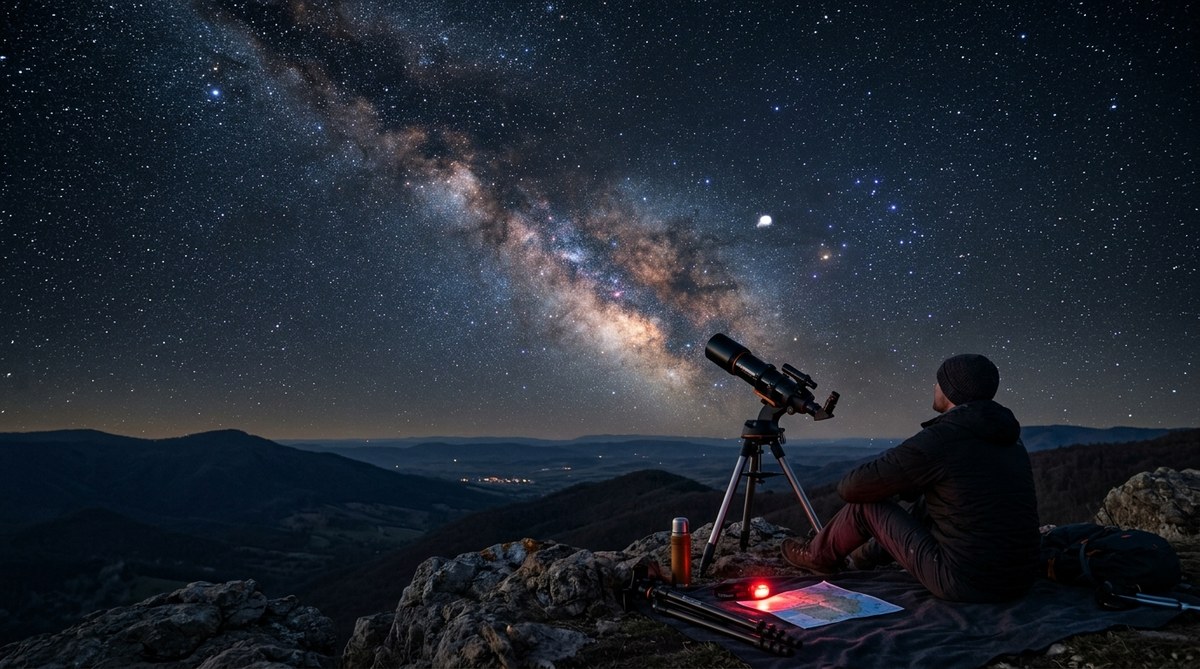
Getting started with astronomy can seem overwhelming at first. The night sky is full of wonders waiting to be discovered. Whether you want to see constellations, planets, or just enjoy the beauty of the stars, this guide will help you take your first steps confidently. With simple tips and resources, you’ll soon be spotting celestial objects and understanding what you see beyond our planet.
This beginner’s guide offers easy steps to start your astronomy journey. Learn about the night sky, choose simple equipment, and enjoy the wonders of celestial observation with confidence and curiosity.
Understanding the fundamentals of the night sky
Before you start observing, it helps to understand some basic concepts. The night sky is a vast canvas filled with stars, planets, the Moon, and other celestial objects. Learning how to read this canvas makes stargazing more enjoyable and meaningful.
What are stars and constellations?
Stars are massive balls of burning gas emitting light. They form patterns called constellations, which are like celestial landmarks. Many constellations are linked to myths and stories from different cultures. For example, Orion, the hunter, is a prominent constellation that is easy to find during winter in the northern hemisphere.
How do planets differ from stars?
Planets are worlds orbiting stars. Unlike stars, planets do not produce their own light but reflect the Sun’s light. The planets in our solar system can be seen with the naked eye and change positions over time. They often appear as bright points of light that don’t twinkle as much as stars.
Why is understanding the moon important?
The Moon is Earth’s only natural satellite and the easiest celestial object to observe. Its phases change throughout the month, and each phase offers a different view. Familiarity with the Moon’s cycle helps you plan your stargazing sessions.
Practical steps for beginning your stargazing adventure
Starting with astronomy requires only a few simple steps. Here’s a straightforward process to help you begin:
- Pick a good observation spot
Find a location away from city lights. Parks, rural areas, or your backyard with minimal light pollution are ideal. The darker the sky, the more stars you will see.
- Get oriented with the night sky
Use a star chart or a stargazing app to identify major constellations and bright planets. Apps like Stellarium or SkyView can help you navigate the sky from your location instantly.
- Choose simple equipment
You don’t need fancy telescopes at first. A good pair of binoculars is enough to see the Moon’s craters, some planets, and brighter star clusters. As you learn more, you can consider upgrading your gear.
Quick tips for successful stargazing
- Plan your sessions around clear, moonless nights for the best visibility.
- Dress warmly if you are in a cold climate.
- Allow your eyes to adapt to darkness for at least 20 minutes.
- Keep a notebook to jot down your observations.
Common mistakes to avoid when starting out
| Technique | Mistake to Avoid |
|---|---|
| Relying solely on bright stars | Ignoring fainter objects that reveal more of the sky’s richness |
| Using bright light sources | Flashlights or phone screens ruin your night vision |
| Ignoring weather conditions | Cloudy or windy nights make stargazing frustrating |
| Expecting to see detailed objects | Many objects require patience and proper equipment |
Expert advice
“Patience is key in astronomy. The more time you spend observing, the more you’ll notice subtle details and patterns in the sky.” – Dr. Jane Starfield
Easy-to-remember techniques and common mistakes
- Use a star chart or app to help with orientation.
- Avoid bright lights that can spoil your night vision.
- Regularly check the weather forecast before heading out.
- Don’t rush; take your time to enjoy the view and learn.
Building your knowledge and skills over time
As you become more comfortable with the basics, you can expand your understanding. Join local astronomy clubs or online communities to share experiences and learn from others. Attend star parties or workshops to see different equipment and techniques in action.
How to deepen your understanding
- Study specific constellations and their stories.
- Learn about celestial events like meteor showers and eclipses.
- Keep observing different objects, from planets to deep-sky objects like nebulae and star clusters.
Equipment upgrades for enthusiasts
Eventually, you might want a telescope for detailed views. Start with a beginner-friendly model that is easy to set up and use. Read reviews and ask for advice at local stores or online forums.
Final encouragement for your stargazing journey
Remember, astronomy is a lifelong pursuit filled with constant discovery. Your first steps might be simple, but each night under the stars brings new insights. Keep curiosity alive, and don’t be discouraged if some nights are cloudy. The universe is patient and waiting for you to join its story.
A warm invitation to keep looking up
Take your time to learn the sky at your own pace. Enjoy the process of finding patterns, understanding their stories, and marveling at the universe’s vast beauty. Stargazing is a rewarding hobby that can bring peace, wonder, and a sense of connection to something much bigger than ourselves. Grab your binoculars, find a dark spot, and start your adventure today. The night sky is waiting to tell its stories.